Your tires play an essential role in braking, steering, traction, and overall vehicle safety. A puncture, damaged sidewall, uneven wear, or persistent loss of air pressure can affect how your vehicle handles and may require prompt attention.
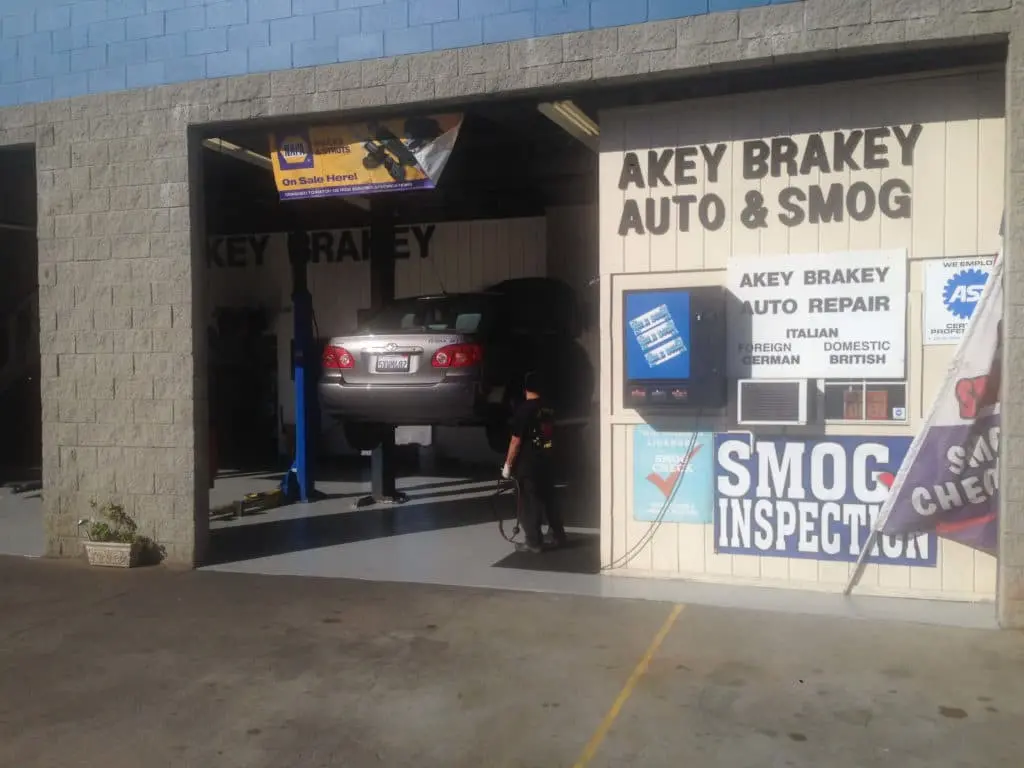
Akey Brakey Auto Repair & Smog serves drivers in Agoura Hills, California. If you have a flat tire, notice unusual tire wear, or suspect tire damage, contact us to discuss your vehicle’s condition and the tire services available.
Have a tire concern? Call (818) 706-2349.
Akey Brakey Auto Repair Tire & Smog
28118 Dorothy Dr #12, Agoura Hills, CA 91301
Call: (818) 706-2349
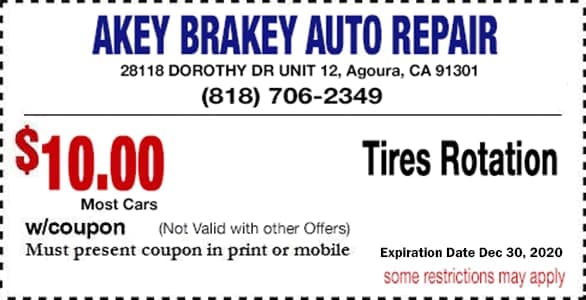
$10 Tires Rotation Coupon
See Detail
- Most Cars
- Must present coupon before write-up
- Some restrictions may apply
Akey Brakey Auto Repair Tire & Smog
28118 Dorothy Dr #12, Agoura Hills, CA 91301
Call: (818) 706-2349
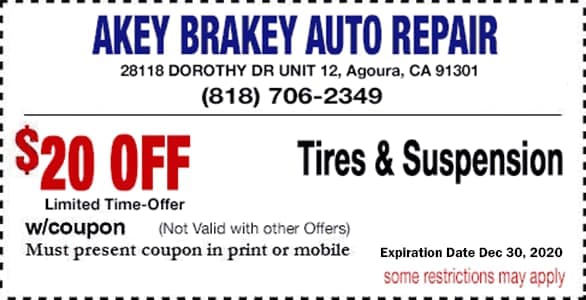
$20 Off Tires & Suspension Coupon
See Detail
- Most Cars
- Must present coupon before write-up
- Some restrictions may apply
Common Signs Your Tires Need Attention
Inspecting your tires regularly can help you recognize problems before they become more serious. Contact an automotive professional if you notice any of the following:
- Repeated loss of air pressure: A tire that repeatedly loses pressure may have a puncture, a leaking valve, a bead-sealing problem, or other damage.
- Visible punctures: Nails, screws, or other objects lodged in a tire should be professionally assessed. Do not remove an embedded object before the tire has been evaluated.
- Cracks, bulges, or cuts: Visible damage, especially on the sidewall, may mean the tire is unsafe to repair.
- Uneven tread wear: Irregular wear can be associated with alignment problems, incorrect inflation, worn suspension components, or other issues.
- Vibration while driving: Vibration may be related to tire damage, wheel imbalance, wheel problems, or other mechanical concerns.
- Low tread depth: Worn tread reduces the tire’s ability to maintain traction, particularly on wet roads.
If a tire is visibly damaged, rapidly losing air, or severely underinflated, avoid driving on it. Pull over safely and arrange assistance if necessary.
Flat Tire Repair
Not every flat tire can be repaired safely. Whether a tire is repairable depends on the location and size of the damage, the tire’s condition, and whether it has been driven while underinflated.
A tire inspection may consider:
- The location and size of the puncture.
- Whether the damage is within the repairable tread area.
- The condition of the sidewall and remaining tread.
- Whether the tire has internal damage from being driven while flat or underinflated.
- The tire manufacturer’s repair recommendations and applicable industry guidelines.
Sidewall damage, significant structural damage, or evidence of internal damage may make a tire unsuitable for repair. A qualified inspection is needed before deciding whether a repair or replacement is appropriate.
When Is Tire Replacement Necessary?
Replacing a tire may be the safer option when damage cannot be repaired properly or the tire has reached the end of its useful life.
Reasons a tire may need replacement include:
- Tread worn to the applicable replacement limit.
- Sidewall bulges, serious cuts, or structural damage.
- Punctures outside the tire’s repairable area.
- Internal damage caused by driving on a flat or severely underinflated tire.
- Age-related deterioration or other damage that compromises the tire’s condition.
When replacing tires, it is important to select the correct size and specifications for your vehicle. Depending on the vehicle and drivetrain, replacing one tire may also require consideration of tread-depth differences between tires. Consult your owner’s manual or a qualified tire professional for guidance.
Why Proper Tire Pressure Matters
Maintaining the recommended tire pressure helps support handling, tire life, and fuel efficiency. Both underinflation and overinflation can affect tire performance and wear.
Check tire pressure when the tires are cold and follow the pressure listed on the vehicle manufacturer’s tire-information label, commonly located on the driver’s door jamb, or in the owner’s manual. Do not use the maximum pressure printed on the tire sidewall as a substitute for the vehicle’s recommended pressure.
If a tire repeatedly loses air, simply adding air is not a long-term solution. The cause should be identified and addressed.
Tire Wear, Wheel Alignment, and Suspension
Tire problems sometimes point to issues elsewhere on the vehicle. Incorrect wheel alignment, worn suspension components, wheel imbalance, or incorrect tire pressure can contribute to irregular wear or vibration.
If your tires are wearing unevenly, an inspection may help determine whether you need tire service, wheel alignment, suspension repair, or another type of maintenance.
Learn more about our wheel alignment services and suspension and steering repair.
How to Help Extend Tire Life
Although tires naturally wear over time, appropriate maintenance can help you get the most from them.
- Check tire pressure regularly and follow the vehicle manufacturer’s recommendations.
- Inspect the tread and sidewalls for unusual wear or visible damage.
- Follow the recommended tire-rotation schedule when applicable.
- Address alignment, suspension, or steering concerns promptly.
- Use tires that meet your vehicle’s required size and specifications.
- Replace tires when their condition or tread depth makes continued use unsafe.
Tire Repair & Replacement FAQs
Can a nail in my tire be repaired?
Sometimes. Repairability depends on the puncture’s location and size, the tire’s condition, and whether internal damage has occurred. A professional inspection is necessary to determine whether repair is safe.
Can a tire with sidewall damage be repaired?
Sidewall cuts, bulges, and structural damage generally make a tire unsuitable for ordinary puncture repair. Have the tire inspected and avoid driving on it if its safety is in question.
How do I know when my tires need replacing?
Signs include worn tread, visible structural damage, age-related deterioration, and repeated pressure loss that cannot be safely resolved. A tire professional can assess its condition and advise whether replacement is needed.
Why does one tire keep losing air?
Possible causes include a puncture, a leaking valve, damage around the wheel rim, or another sealing problem. The source should be identified rather than repeatedly topping up the tire without investigation.
Can poor wheel alignment damage my tires?
Yes. Incorrect alignment can contribute to uneven or accelerated tire wear. Incorrect pressure, worn suspension parts, and other factors can also affect tire condition.
Should I drive on a flat tire to reach a repair shop?
No. Driving on a flat or severely underinflated tire can damage the tire and wheel and may cause you to lose control. Stop somewhere safe and arrange roadside assistance or another appropriate solution.
How can I ask about tire repair or replacement?
Call (818) 706-2349 and describe the problem. Provide your vehicle’s year, make, and model and, if possible, the tire size shown on the tire sidewall or vehicle information label.
Contact Akey Brakey Auto Repair & Smog
If you have a flat tire, notice uneven tread wear, or suspect tire damage, contact Akey Brakey Auto Repair & Smog to discuss your concerns and the services available for your vehicle.
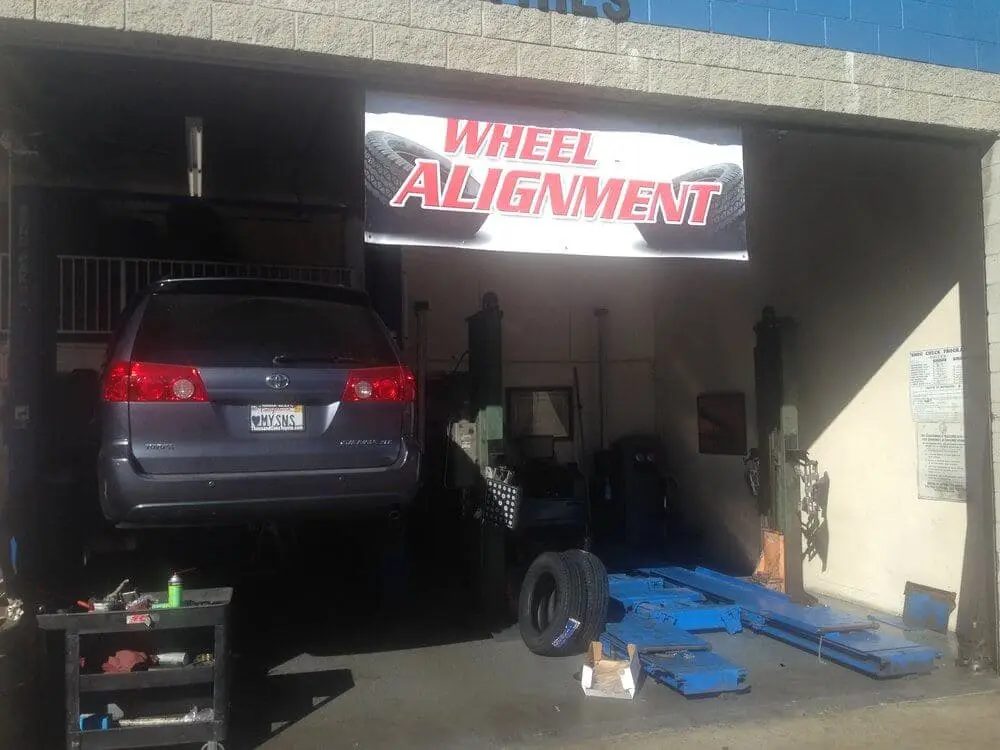
Akey Brakey Auto Repair & Smog
28118 Dorothy Dr #12
Agoura Hills, CA 91301
Phone: (818) 706-2349
Explore Our Auto Repair Services | Contact Us | Get Directions